Recipe · Italy
Italian Focaccia: Dimpled, Oily and Salted the Genoese Way
A wet, high-hydration focaccia genovese with a soft crumb and a salty olive oil crust, baked in a large tin and made with folds rather than hard kneading.
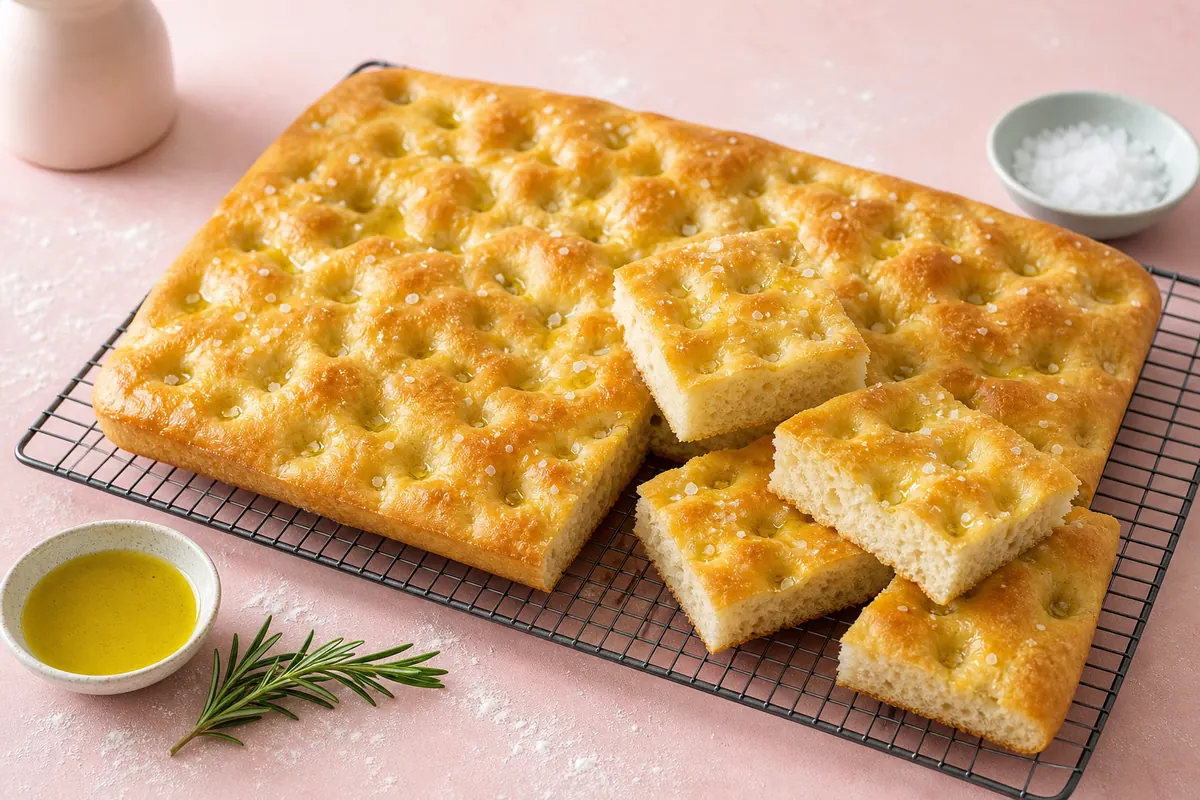
Focaccia is one of the simplest breads in Italian cooking, and also one of the most rewarding. At its best it is soft and airy inside, with a thin crust that is crisp underneath, glossy with olive oil and strewn with salt crystals. The version associated with Genoa and the Ligurian coast is flatter than most, usually no more than two or three centimetres high, and is dimpled all over and finished with a salty brine that gives it its distinctive shine.
In Genoa, focaccia is a breakfast bread. It is sold warm from the oven in bakeries known as forni, cut into rectangles and wrapped in paper, and it is common to dip it into a cappuccino, which surprises visitors who expect it to be an accompaniment to supper. It is just as good at lunch, split and filled, or served beside a plate of cured meats and cheese.
A wet dough, handled gently
The secret of a good focaccia is hydration. This recipe uses 400g of water to 500g of flour, which is 80 per cent, and the dough is sticky enough that it feels impossible to knead. You do not need to. Instead, a series of stretches and folds over a couple of hours organises the gluten and builds strength with almost no effort. Wet your hands each time so the dough does not cling, and handle it as if it were a sleeping animal.
Strong white bread flour matters here, since its higher protein content can hold the water and the gas. Plain flour makes a slacker dough that spreads and bakes into something closer to a flatbread. Our guide to flour types explains the difference in more detail.
Oil, dimples and brine
Be generous with the olive oil in the tin; it effectively fries the base of the loaf and gives a crisp, golden underside. A tin around 30 x 40cm gives the right thickness. A smaller tin produces a taller, more bread-like focaccia, which is still delicious but less authentic.
The dimples are not just decoration. Pressing your fingers all the way down to the metal knocks out the large bubbles and creates little wells where the brine and oil collect. The brine itself is a Ligurian touch: a simple mix of water, oil and salt poured over the top just before baking, which keeps the surface moist and helps it to brown evenly.
Toppings are a matter of taste. Rosemary and flaky salt are the classic pair. Halved cherry tomatoes, olives and thinly sliced red onion also work, as long as you press them in so they do not catch and burn. Keep the toppings light, because a heavily loaded focaccia loses its character.
Baking and timing
Bake in the upper third of a hot oven, which helps the top to colour while the base crisps. Check after 22 minutes: the edges should be deep golden and the bottom, when you lift a corner with a spatula, brown and firm. If the top is pale but the base is done, finish it for two minutes under the grill.
If you prefer to plan ahead, the dough can be given its folds and then left covered in the fridge overnight. Next morning, let it come back to room temperature in the tin, dimple it and bake. The cold rise gives a deeper flavour and a more open crumb, and it means warm bread for breakfast with very little work on the day.
Bake sheet
The recipe: Focaccia genovese
- Oven
- 220°C200°C fan · gas 7
- Makes
- 12 pieces
- Prep
- 25 min
- Baking
- 25 min
- Total
- 4 hr
Ingredients
Tick off each ingredient as you weigh it out.
Method
- Stir the flour, salt and yeast together in a large bowl, then add the water and mix to a rough, very sticky dough. Cover and leave for 30 minutes.
- With wet hands, lift one edge of the dough, stretch it up and fold it over the middle. Turn the bowl and repeat all round, about eight folds. Cover and rest for 30 minutes, then fold twice more at 30-minute intervals.
- Pour 3 tablespoons of oil into a 30 x 40cm baking tin and tip in the dough. Turn it once to coat in oil, then gently stretch it towards the corners. If it springs back, rest it for 10 minutes and try again.
- Cover and leave in a warm place for 1–1½ hours, until puffy and filling the tin. Heat the oven to 220°C (200°C fan, gas 7).
- Oil your fingers and press them firmly down to the base of the tin to make deep dimples. Whisk the brine ingredients together and pour it over the surface so it pools in the dimples. Scatter with flaky salt and any toppings.
- Bake for 22–25 minutes, until golden. Slide out of the tin onto a wire rack and brush with a little more olive oil while warm.
Focaccia is best on the day it is made. Leftovers keep well wrapped at room temperature for a day, and are lovely split and toasted, or cut into cubes and baked into croutons for soup. Freeze portions tightly wrapped, and warm them for ten minutes in a hot oven to bring back the crust.