Guide · Baker's notes
Cake Mixing Methods: Creaming, Rubbing In, Melting and Whisking
The main ways to mix a cake or biscuit dough, from creaming and rubbing in to melting and whisking, with when to use each and the mistakes that spoil them.
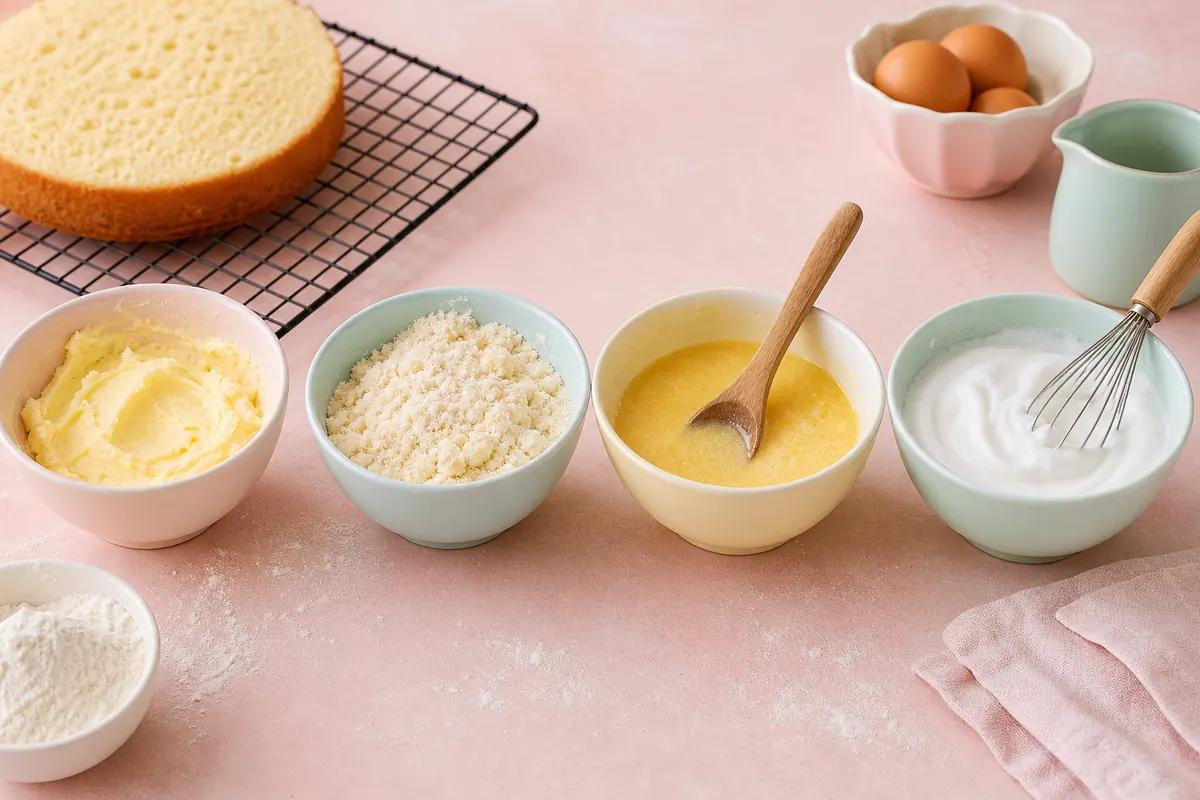
Two cakes can use almost the same ingredients and turn out completely different, simply because of the way they were mixed. The method decides how much air goes in, how much gluten develops and how the fat is distributed through the batter. Once you recognise the handful of standard methods, you can read almost any recipe and know what kind of texture it is aiming for.
Creaming
Creaming is the classic method for a Victoria sponge, a Madeira cake or a batch of biscuits. You beat soft butter and sugar together until the mixture is noticeably paler and fluffy, which takes about three to five minutes with an electric whisk. The sugar crystals cut tiny pockets of air into the fat, and those pockets expand in the oven and give the cake its crumb. Eggs are then added a little at a time, beating well between each addition, and the flour is folded in at the end.
The two common errors are using butter straight from the fridge, which will not trap air, and adding the eggs too fast, which makes the mixture curdle. If it does split, a spoonful of the measured flour will usually bring it back together. Our Victoria sponge uses this method.
All-in-one
The all-in-one method is a shortcut to the creamed sponge. Soft butter, sugar, eggs and self-raising flour go into one bowl and are beaten together until smooth, usually with a little extra baking powder to make up for the air that creaming would have added. It is quick and reliable for everyday sponges, but the crumb is slightly closer than a properly creamed cake. The butter must be really soft, or it will leave flecks in the batter.
Rubbing in
Rubbing in is used for scones, shortcrust pastry, crumbles and some plain cakes. Cold butter is worked into flour with your fingertips until the mixture resembles fine breadcrumbs, which coats the flour in fat and limits how much gluten can form. For scones and rock cakes the ratio is usually about one part fat to two parts flour. Work quickly and lightly with cool hands, lifting the mixture as you go to let air in. If the fat melts, the result will be greasy and heavy.
Melting
Gingerbread, flapjacks, brownies and parkin are all made by melting the butter, sugar and syrup together before stirring in the dry ingredients. There is no creaming and little aeration, so these bakes are dense, moist and often improve with a day or two of keeping. The batter is generally thin and pourable. Cool the melted mixture slightly before adding eggs, so that they do not scramble.
Whisking
A whisked sponge, such as a genoise or Swiss roll, has no baking powder at all and depends entirely on air whisked into the eggs. You beat the eggs and sugar, ideally over a pan of barely simmering water at first, until the mixture is thick, pale and leaves a trail on the surface when the whisk is lifted. This is called the ribbon stage and can take ten minutes. The flour is then folded in as gently as possible. These cakes are very light but dry out quickly, so they are usually moistened with syrup or filled with cream.
Folding
Folding is not a method in itself, but a technique you need for several of them. The aim is to combine a heavy mixture with a light one without knocking out the air. Use a large metal spoon or a flexible spatula, cutting down through the middle of the bowl, sweeping along the base and bringing the mixture up and over. Turn the bowl a quarter turn after each fold, and stop as soon as you cannot see dry flour. Overworking at this stage is a common cause of a cake that sinks or turns out tough; our guide to why cakes sink goes through the other likely culprits.
Choosing the right one
If a recipe tells you which method to use, follow it, because the quantities have been balanced for that technique. If you are improvising, a simple rule helps: use creaming for light, fluffy cakes, rubbing in for crumbly textures, melting for moist and sticky bakes, and whisking when you want maximum lightness with little fat. Whichever you use, weigh your ingredients, bring eggs and butter to room temperature and do not open the oven door until the cake has had at least two thirds of its baking time.